“A Blank Page Will Always Be Worse Than Anything You Could Write,” Hafeez Taqi on Being A Published Author
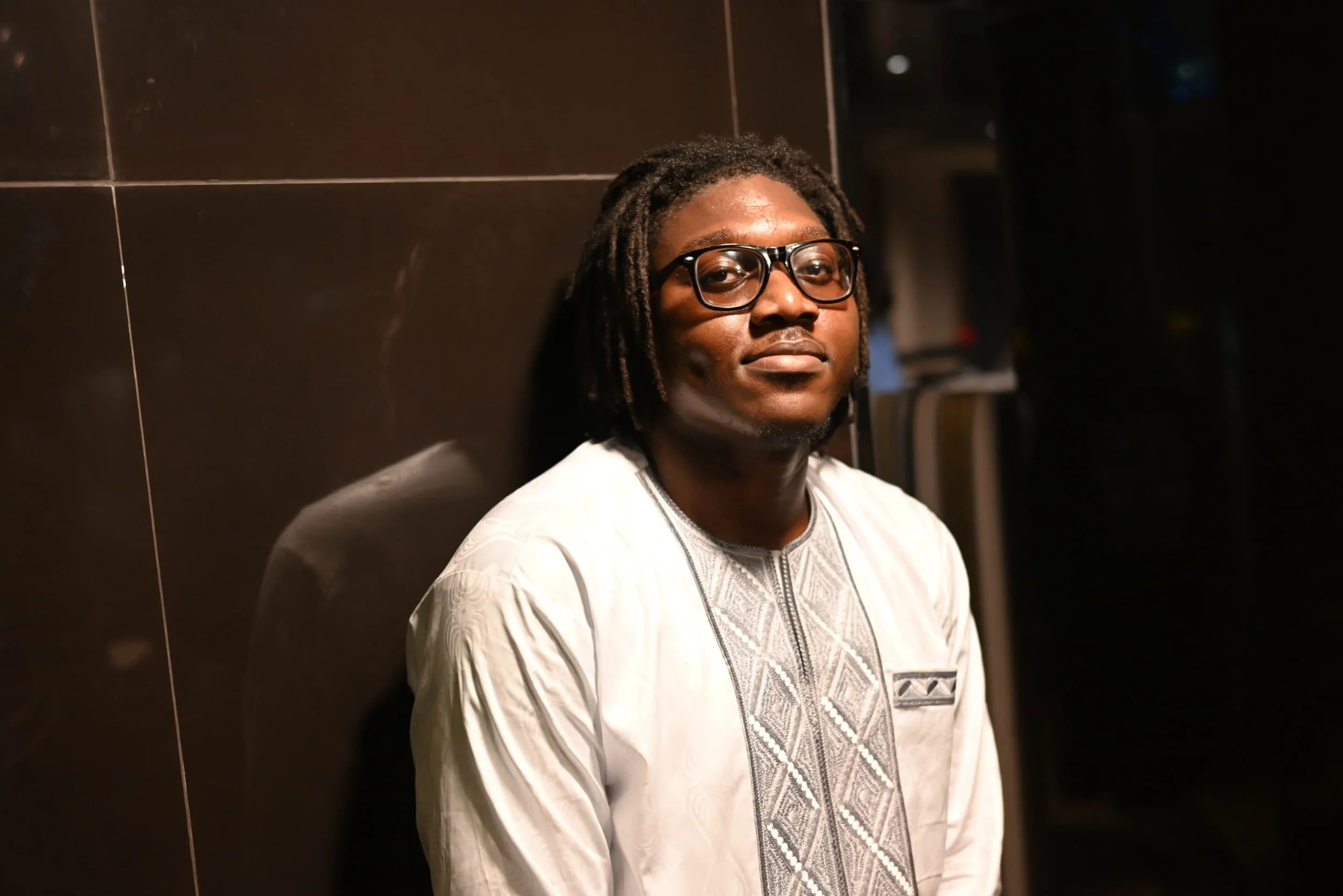
Hafeez Taqi is a writer based in Freetown, Sierra Leone.
Hafeez O. A. Taqi is a 21-year-old graduate with an LLB Honours degree from Fourah Bay College of the University of Sierra Leone. He is a student of the arts who discovered his love of reading at a young age and, subsequently, a talent for writing. Born in Iran and spending a significant amount of his childhood in Cambridge, England, before finally returning to Sierra Leone with his family, Hafeez was exposed to many written works growing up and, with the support of his parents, family, and teachers, has broadened his understanding of literature. He began writing short stories from an early age, dabbling in a variety of genres and winning writing competitions at the inter-secondary and national level.
The following interview took place via WhatsApp between Taqi and Poda-Poda Stories’ administrative intern, Mayenie Conton.
This transcript has been edited for clarity.
Poda-Poda Stories: Welcome to the Poda-Poda, Hafeez Taqi. Please tell us a bit about yourself and your book, Divine and Other Short Stories.
Hafeez Taqi: I'm a recent graduate from the Fourah Bay College, University of Sierra Leone, holding an LLB Honours Degree. In the past year, I completed and published my book Divine and Other Short Stories, with help from several people, for which I am supremely grateful. Divine is a compilation of short stories and poems that I had been working on for some years, some having foundations that I thought up when I was as young as 10. With encouragement from my family and my own desire to write, I made the decision to make the final effort to share my work.
Poda-Poda Stories: When did you first realize that writing was something you wanted to do, and what steps did you take to make that goal a reality?
Taqi: I always had a love of reading growing up, which was heavily encouraged by my family and teachers. I was always at my happiest reading a multitude of books from various genres, so when I eventually began to write, it seemed that it came naturally to me. I was about 12 when I began to have an inkling that publishing a book was something that I would like to do, but there was no real urgency to it. By the time I was 19, it solidified into a concrete goal, so I compiled the first drafts of my works and contacted the Sierra Leone Writers’ Series. They were impressed with the collection and were happy to publish the book after a few rounds of rewrites and fine-tuning, which I will always be grateful for.
Poda-Poda Stories: What inspired you to write Divine and Other Short Stories in particular?
Taqi: Well, being able to put down ‘Published Author’ on my CV was definitely a plus, but I would say that my overarching inspiration was my parents. They always encouraged my siblings and me to read, and are avid readers themselves, so we always had a well-stocked library of books at home to keep us occupied. Their bookshelves were always filled with great and celebrated African authors, and a part of me wanted my name to be up there as well.
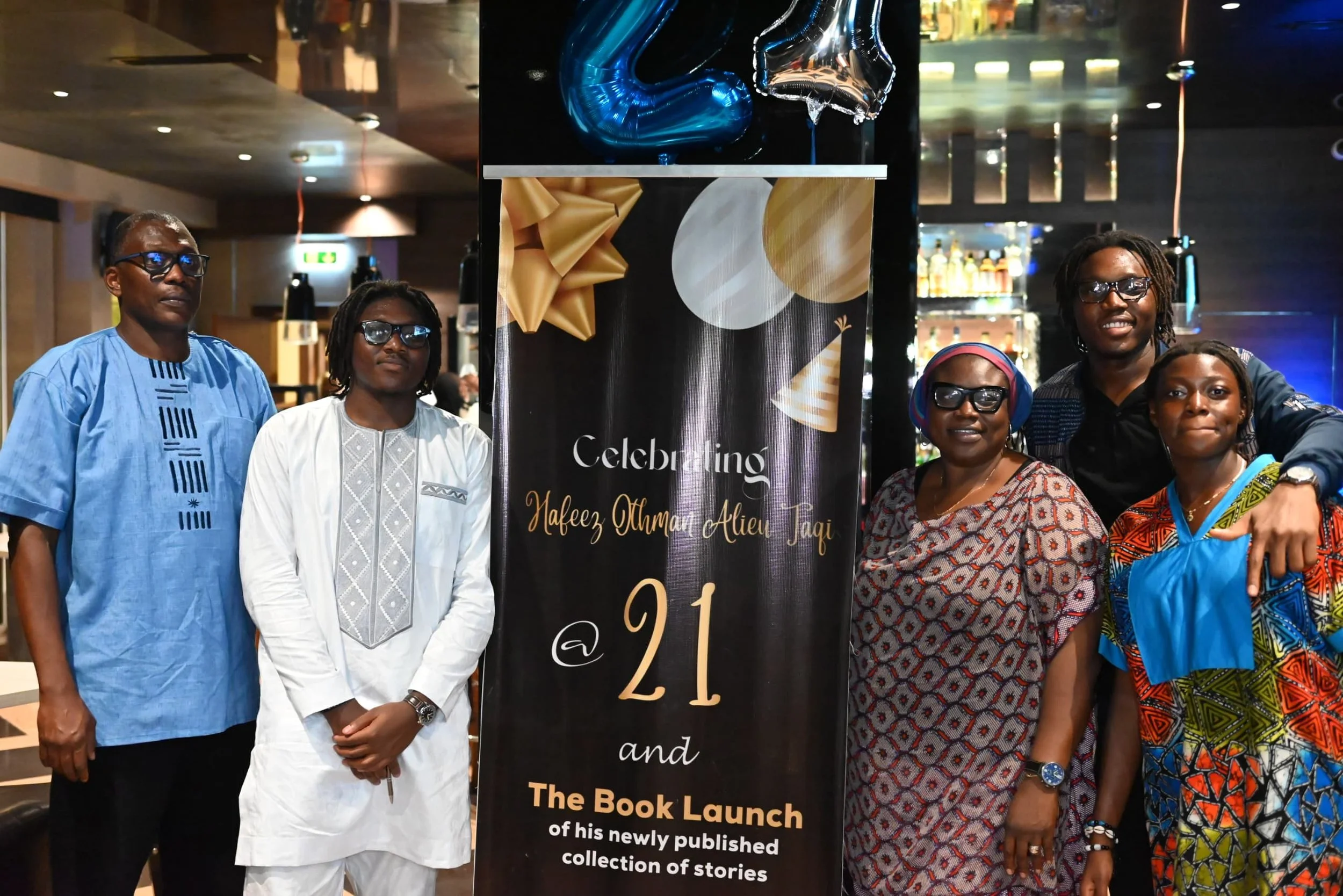
Taqi and immediate family at book launch celebration.
Poda-Poda Stories: What, in your opinion, makes your short stories and poems uniquely Sierra Leonean?
Taqi: I always inject a bit of myself and my own experiences into any story I’m writing. So any detail, from the smallest to the most obvious, would most likely be something that I’ve pulled from my own life. My work is uniquely Sierra Leonean because I’m uniquely Sierra Leonean.
Poda-Poda Stories: The short stories in your book range from fantasy to horror, with many of them pushing the boundaries of a singular genre. What would you say is your most prevalent genre, and how would you describe it?
Taqi: I wouldn’t say I write from any specific genre. My stories have most commonly been described as ‘Speculative Fiction’ with a focus on what-if scenarios. The way I see it is that I write from perspectives and points of view that might otherwise be overlooked, but when some thought is given to them, it opens an entirely new outlook. With all that being said, I’ll admit to having a soft spot for fantasy stories.
Poda-Poda Stories: Who are some of your writing influences or role models?
Taqi: With the amount of books and authors I’ve gone through, pinpointing specific role models is difficult, but the writing styles of Rick Riordan and George R. R. Martin definitely helped me with my writing, as well as Chinua Achebe and the raw emotion that his works provoke.
Poda-Poda Stories: As we all know, writing short stories is an amazing feat of its own, but it is an entirely different thing to decide that you want to publish a collection of short stories. What was it like to make that decision, and what was the process of publication like?
Taqi: I knew that I wanted to have my stories out there, and it just made the most sense to put them in one place so people could enjoy them easily. The process itself wasn’t too hard, all things considered. The SL Writer’s Series handled a lot of the details that go into publication, so it was smooth sailing for the majority of the journey.
Poda-Poda Stories: What was the editing process like? How did you decide what stories and poems would make the cut, and the order in which they would appear?
Taqi: I made sure to put my best foot forward when going to SLWS, so I’d already gone through them beforehand to take care of any obvious errors. I worked with an SLWS editor for 4 to 5 months to fine-tune the stories and make sure they were suitable for public consumption. I placed them in the order that I thought would keep a reader most engaged with the stories and eager to see more.
Poda-Poda Stories: Which one of the stories was the most challenging to write, and why? Which one was easiest?
Taqi: I would say that ‘Growing Up Sierra Leonean’ was probably the most difficult to get right. It was my only non-fiction work and was a direct retelling of my own experience as a Sierra Leonean, so I felt that I had to take extra care to do myself justice, as well as make the work engaging for the reader.
Poda-Poda Stories: You’ve mentioned that these stories were written over a span of many years, with most of this work being done while you were simultaneously a student. How did you navigate the duality of schoolwork and creative writing?
Taqi: Creative writing is more of a hobby for me, so there was never really any threat of it interfering with my schoolwork (which, as many Africans know, would not have been tolerated if it did). Whenever I had a quiet moment to myself or an idea that I just felt the need to write down, I would pen it down and let my imagination run wild. With the stories being written over the years, I never found myself rushing or putting too much pressure on myself, which I think is a big factor in why I was able to retain my love for it.
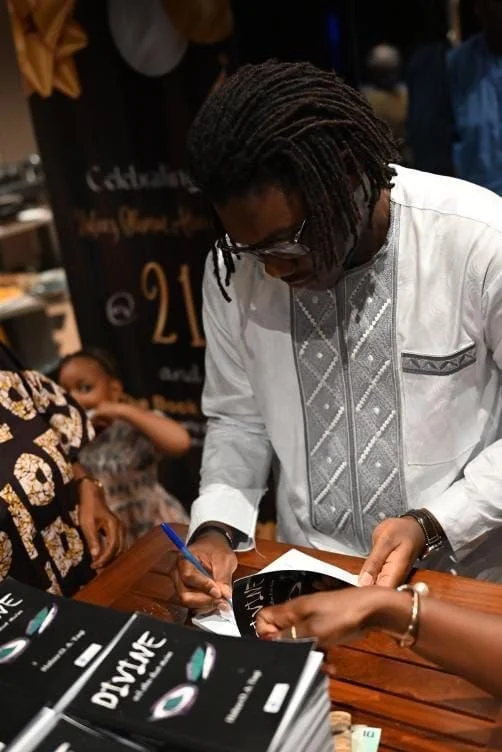
Taqi signing copies of his book.
Divine and other Short Stories is available for purchase
Poda-Poda Stories: Do you have any advice for young, up-and-coming writers?
Taqi: Just write. Take any idea you have, then put pen to paper. You may doubt yourself and your work, but a blank page will always be worse than anything you could write. Above all else, make sure that there’s passion behind your words.
Questions and interview by Mayeni Conton.