For International Literacy Day, Poda-Poda Stories interviewed Ama King, the founder of Sierra Learners and Congo Town Community Library in Freetown. King spoke about the importance of early childhood literacy and how parents, teachers, and other community members can help children become good readers.
This interview has been edited for length and clarity.
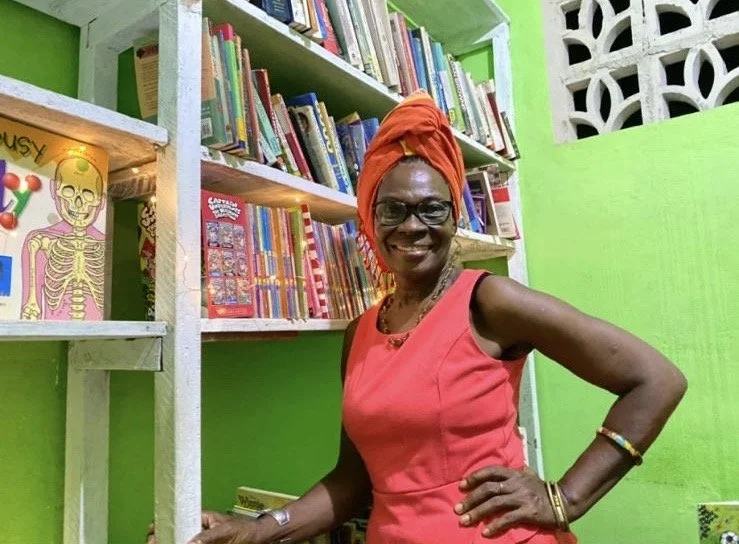
Ama King, founder of Congo Town Community Library in Freetown.
Poda-Poda Stories: What got you interested in childhood literacy in Sierra Leone?
Ama King: I worked at Lismore Library in New South Wales, Australia for 16 years. And while I was there, I decided I would like to bring books to children in Sierra Leone. I am a living example of how education can transform a person. I came from a challenging background, and I was able to raise myself to a level where I can advocate for other people.
When I was a young girl, I didn't even know about the Sierra Leone Library Board when I was in primary school. I didn't know anything about libraries, but I loved reading. And I know how important it is for everyone to be able to read. And so, I thought that's the area I would like to help children in my country.
I started collecting books from people, and luckily my library in Australia helped me quite a lot. I also got a lot of resources and support from Lismore and the whole Northern Rivers community in New South Wales. In 2014, by the time I finished studying for a film and writing degree, I had collected a lot of books, and I started working on raising funds to ship these books to Sierra Leone.
I started an organisation called Sierra Learners and was able to ship a 20-foot container filled with books in 2014. I partnered with PEN Sierra Leone, as they were working on book clubs in schools at the time.
After the PEN Sierra Leone project, I worked with other schools to donate books. So far, we’ve distributed books to over twenty schools both in Freetown and in the provinces. We’ve also set up a classroom library at St. Anthony's Girls School and another at the FAWE Primary School in Kroo Bay.
Then we converted a container into a library at Grace Brethren School in Brookfields. And we also have another container library at Mokombay village near Russell in the Western Area Peninsula.
Poda-Poda Stories: And what has been your experience running that project?
King: When I set up these school and container libraries, I employ teachers to assist the children in their reading and manage the library. Even when I was in Australia, we communicated via WhatsApp, and I would ask them to send me a monthly report about how the project is going.
They still send reports on how many children went to the library daily. For me, it's not about just going and giving the books to the school. "Oh, yes, I gave the school books, I gave the school books." No. It's about following up and making sure that all my efforts, the purpose for which I put all this effort and resources into this project, are actually effective.
Setting up these libraries is good, but it’s not just about having community libraries. I want to make sure that the children are actually reading the books. So, I follow up with the teachers, and I follow up with the kids. I still have a lot of books to donate, so schools can reach out to me if they want to set up classroom libraries.
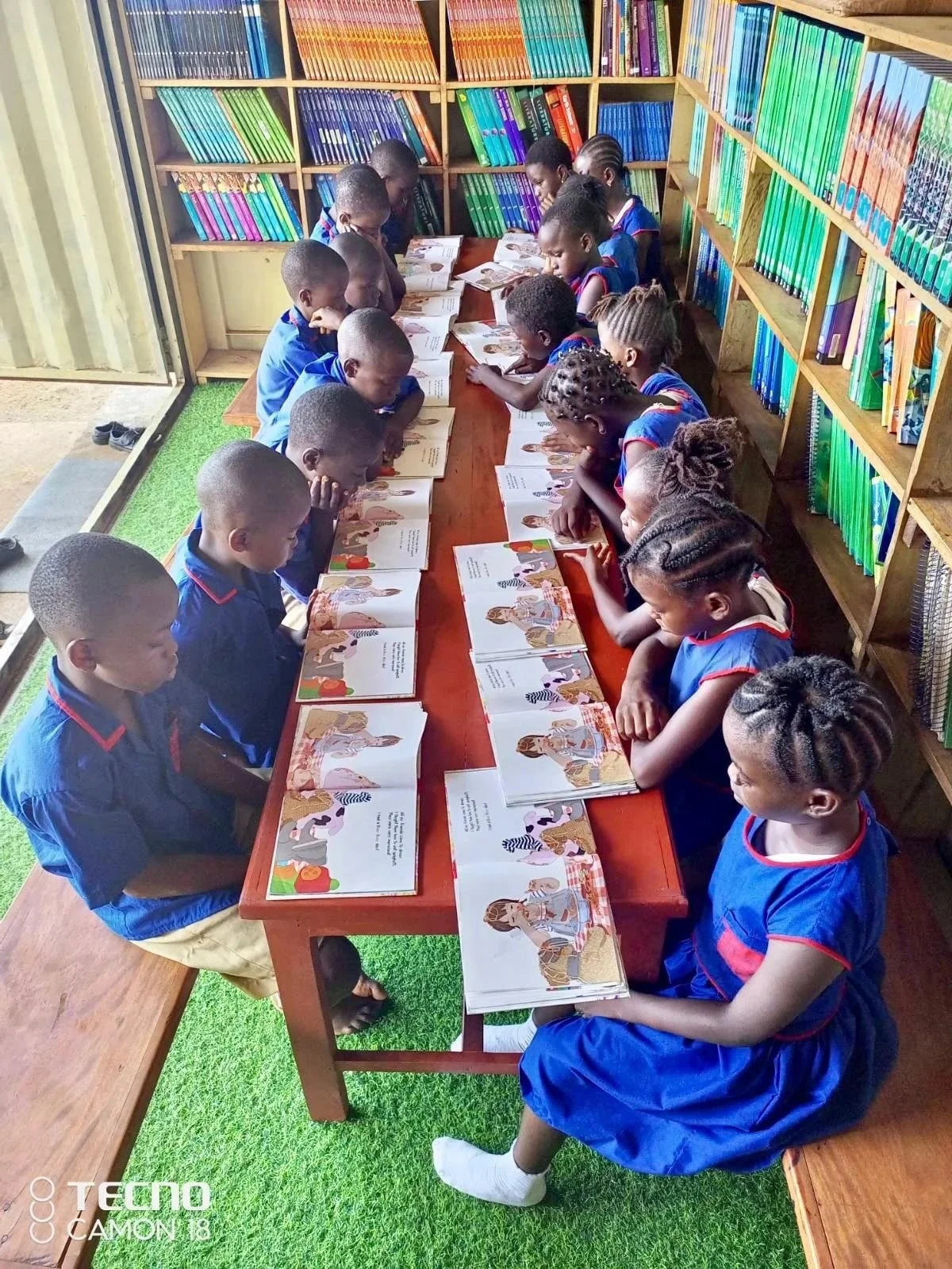
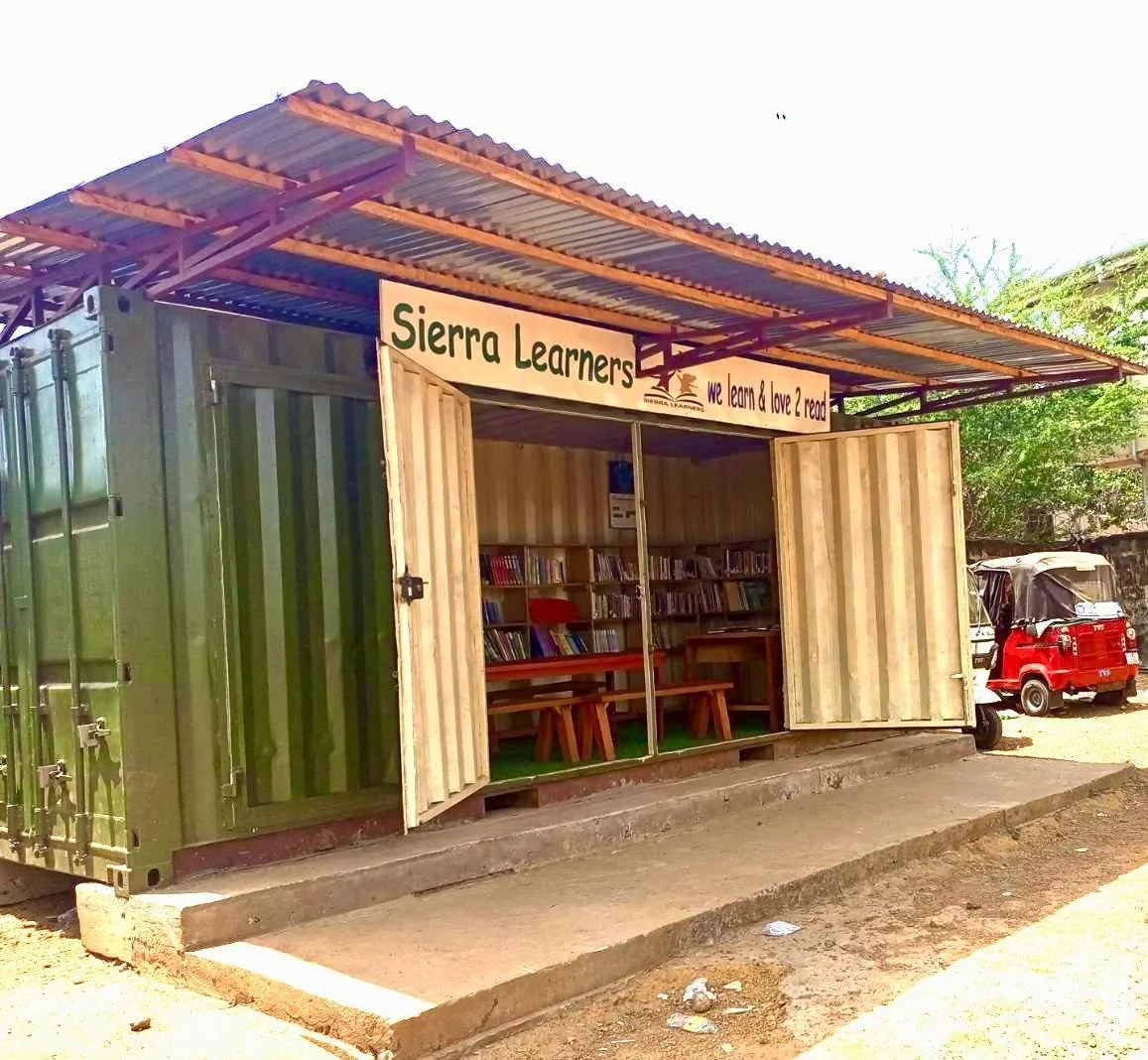
A container library established by Ama King at Grace Brethen Primary School in Brookfields, Freetown.
Poda-Poda Stories: How did you start the Congo Town Community Library, and how does it work? I was so excited when I learned about it because I don’t see spaces like this around Freetown.
King: I believe that every community should have a library. Every school should have a library. The kids in the community who come here are amazing! And they need attention and care when learning how to read. I started putting books in this space when I registered my literacy project in Sierra Leone. It’s actually owned by my mum, and I’ve rented it from her. This space was officially created in 2020, and I’ve been running it full-time since 2024.
The children come here when they have free time, so that’s usually over the weekend and during the holidays when schools are closed. When they’re here, I usually ask them to choose a book that we’ll read together.
I teach them lots of phonics because it’s the magic tool. Once a kid can understand phonics, they can read anything. And when kids can read, they are able to articulate and express themselves better.
I remember a girl, Mariatu, who would get so frustrated because she had difficulty reading. And with time and patience, I was able to get her to read sentences easily, and when she finally got it, her face lit up as if to say, "Oh, I get it. Wow." You know? And moments like that bring me so much joy! We’ve had issues with funding and sponsorship, so right now it’s self-funded, with other support from a small group of friends here in Sierra Leone and in Australia .
Poda-Poda Stories: What challenges do you think children face in terms of literacy in Sierra Leone? And what do you think are some of the solutions to those challenges they face?
King: The statistics, not only in Sierra Leone but worldwide, show that many children cannot read. That is not only in Sierra Leone or in Africa, but worldwide.
I wonder how many children who have access to technology spend time reading, as opposed to how much time they spend on social media. So, there are a lot of forces or distractions that have pushed reading and literacy to the background.
I often go to our Sierra Learners container library at Mokombay village near Russell to monitor and help children with their reading. There, I found that even children in Class Six could not read the first few words of a paragraph.
So, on this World Literacy Day, I want to ask people, partners, organizations, and even individuals who are really interested in children's literacy to help organizations like us that are trying to get children to read and write. Support us so we can help fill the gap. The teachers cannot do it all in school.
Parents also have a huge part to play in their children's learning, so I want to encourage parents to also be a part of their children's reading journey. It goes a long way. Teachers can do their bit, but parents should also be invested in ensuring their children have a good foundation. Sometimes I’ve seen a lack of interest because the parents also cannot read, but that should push them to ensure their kids have a better chance. Let’s do it for the legacy that we want to leave behind and to see our children's faces light up when they know they can read.
Poda-Poda Stories: Thank you, Ms. King. A final question: How have books saved your life?
Books have made me who I am- confident and articulate. I started reading at an early age. In secondary school, I used to read books with dictionaries. Even though it often interrupted the flow, the dictionaries helped me to actually understand what I was reading. For children, books can take them to a whole wide world, and they can just immerse themselves in whatever story that's been created. So, books are beautiful.
Questions and interview by Ngozi Cole.